 |
HOME | SITE MAP | PROJECTS | CONTACT | "LYNX" | |

| ||
 |
||
 |
||||||||||||||
|
 |
 |
|  |
|
 |
|
 |
|
 |
| | ||
| ||||||||||||||




|
||||||||||||||
| Tiger (Panthera tigris), (Panthera tigris jacksoni) | ||||||||||||||||||
|
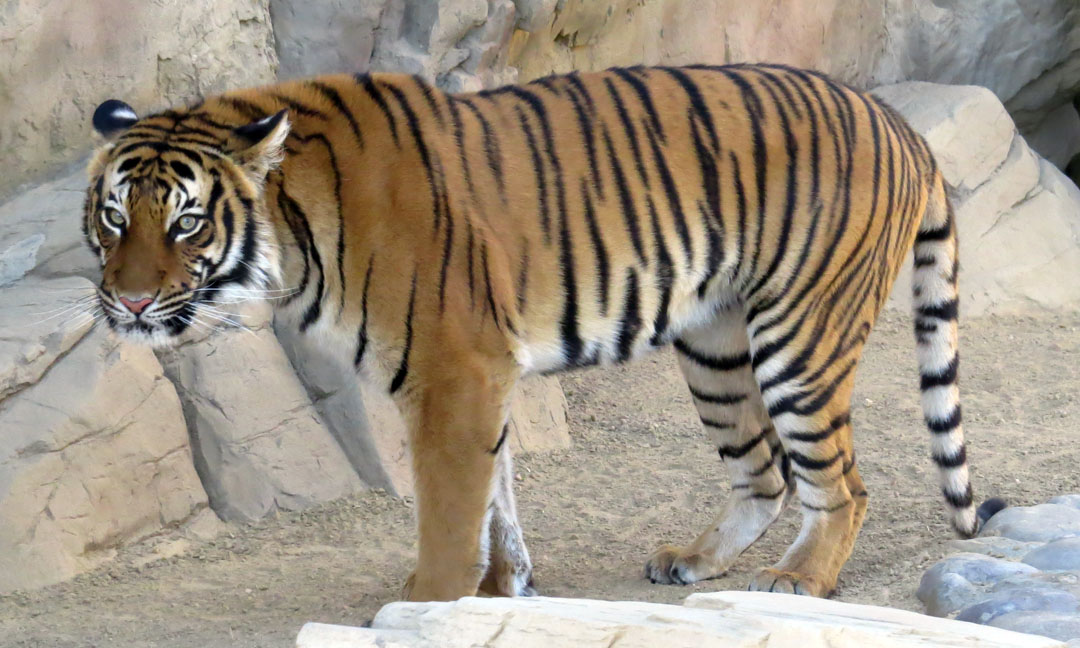
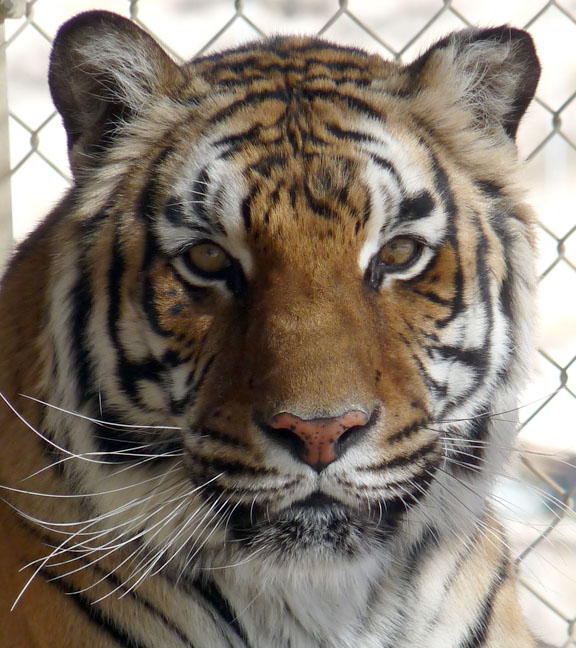
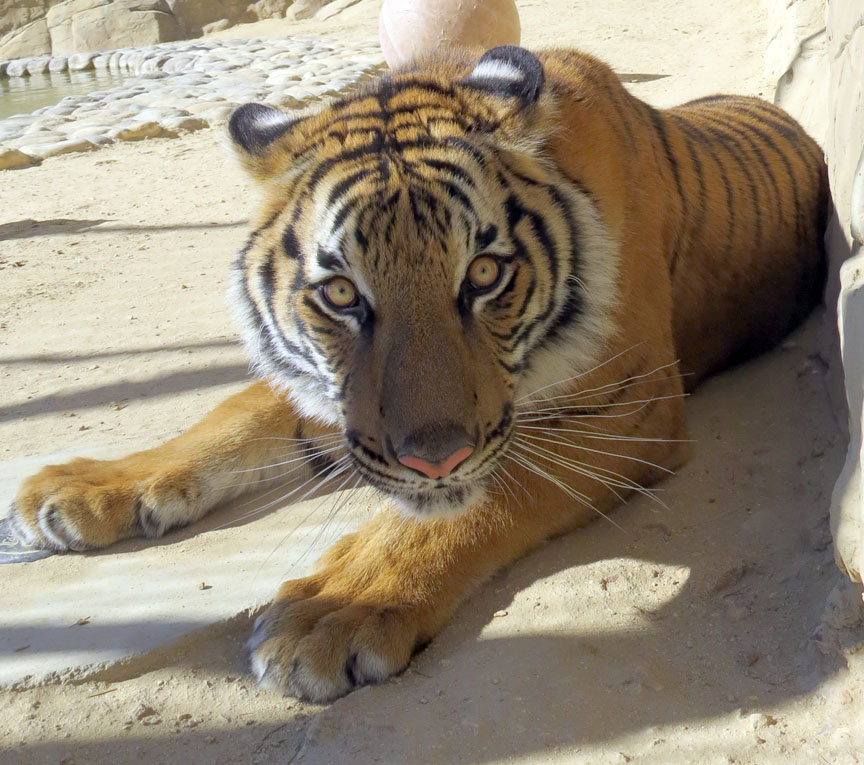
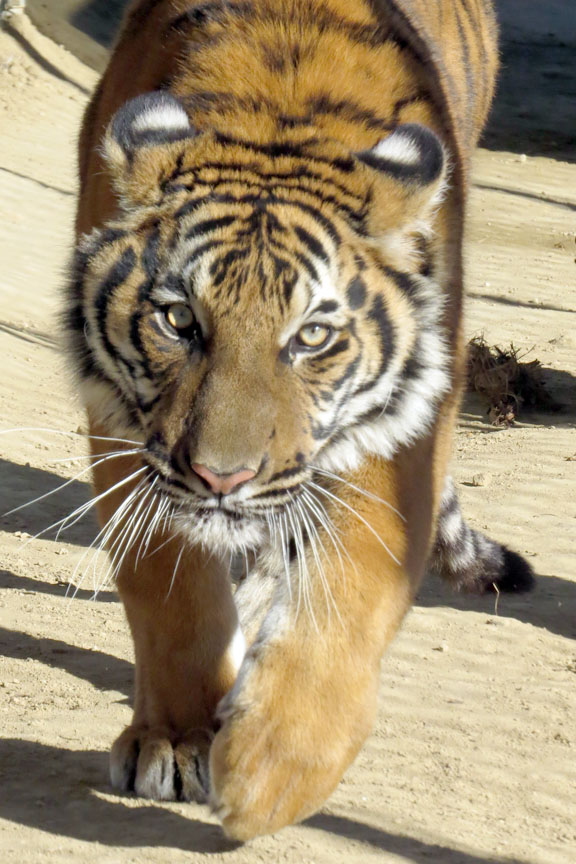
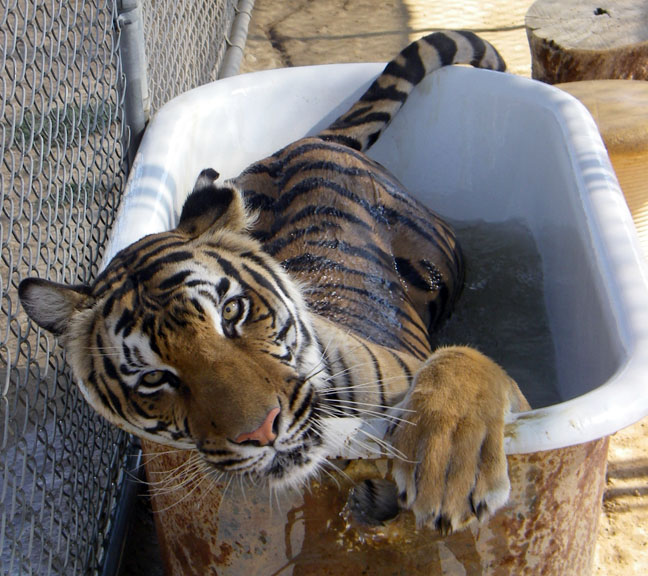
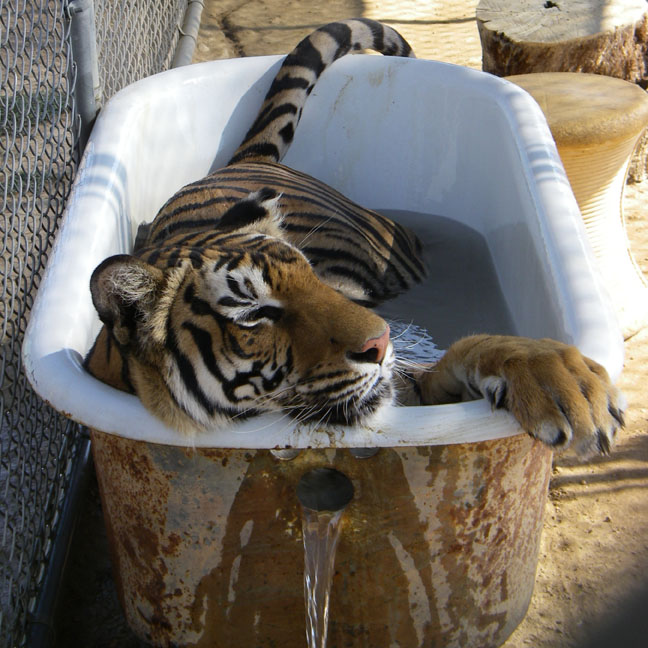
In 2012 we became home to Malayan tigers to begin a breeding program for this endangered subspecies of tiger. The Malayan tiger (Panthera tigris jacksoni) inhabits the southern and central parts of the Malay Peninsula (which includes parts of Thailand and Malaysia); the population is estimated at 500 in the wild. When in 1968 the Indochinese tiger Panthera tigris corbetti was newly designated, the tigers of Malaya and Singapore were included into this subspecies. In 2004, Panthera tigris jacksoni was recognized as a new subspecies when a genetic analysis found that they are distinct from Panthera tigris corbetti. There is no clear difference between the Malayan and the Indochinese tiger when specimens from the two regions are compared by skull size or coat color & pattern. Malayan tigers appear to be smaller than Indian ones, similar in size to Sumatran tigers. Body weight ranges from 52 to 195 lb for females, 104 to 285 lb for males.
Malayan tigers prey on sambar deer, barking deer, wild boar, Bornean bearded pigs and serow. Tigers in Taman Negara also prey on sun bear and elephant calves. Occasionally, livestock is also taken; however, tiger predation reduces the numbers of wild boar which can become a serious pest in plantations and other croplands. Studies indicate that in areas where large predators (tigers and leopards) are extinct, wild pigs are over 10 times more numerous than in areas where tigers and leopards are still present. Malayan tigers currently occur at very low densities in the rainforest as a result of low prey densities. Habitat fragmentation due to development projects and agriculture are serious threats. Commercial poaching occurs at varying levels in all tiger range states. In Malaysia there is a substantial domestic market in recent years for tiger meat and manufactured tiger bone medicines. The largest cat in the world is the Amur, aka Siberian, tiger. The Amur, Malayan, Indochinese, South China, Bengal, and Sumatran subspecies are all declining in the wild due to poaching, persecution, and habitat loss. Three subspecies (Caspian, Bali, Javan) have become extinct since the 1950's. Overall, there are probably no more than 2500 breeding adult tigers in the wild. There are no subpopulations that contain over 250 mature individuals. White tigers are not a separate subspecies. They are Bengal or Siberian-Bengal hybrids exhibiting a recessive color. The correct term for white tigers is chinchilla albinistic: blue eyed, pale-coated, but having a striped pattern. The chinchilla gene is recessive to the normal orange color gene. A separate "wide-band" gene, also recessive, controls spacing and coloration of the stripes, resulting in "pure white" and "golden tabby" tigers. In the 1950's, Mohan (the first captive white tiger to be successfully bred) was mated with Radha, one of his daughters. This produced four white cubs. Typical signs of inbreeding include crossed eyes, curvature of the spine, twisted necks and shortened tendons in the legs. As inbreeding worsens, the number of miscarriages, stillbirths, and unexplained infant mortalities rise. Cubs that do survive become prone to mysterious illness. Today white tigers are so numerous in captivity that many are in sanctuaries for unwanted tigers. In captivity tigers breed well, with up to 6 cubs in a litter. Many of the tigers in circuses or with private owners are generic (not a pure subspecies and/or parental lineage unknown), as are some in zoos. Tigers at EFBC/FCC
|